How much?
The pricing dilemma and why the price might not be as much as it should be

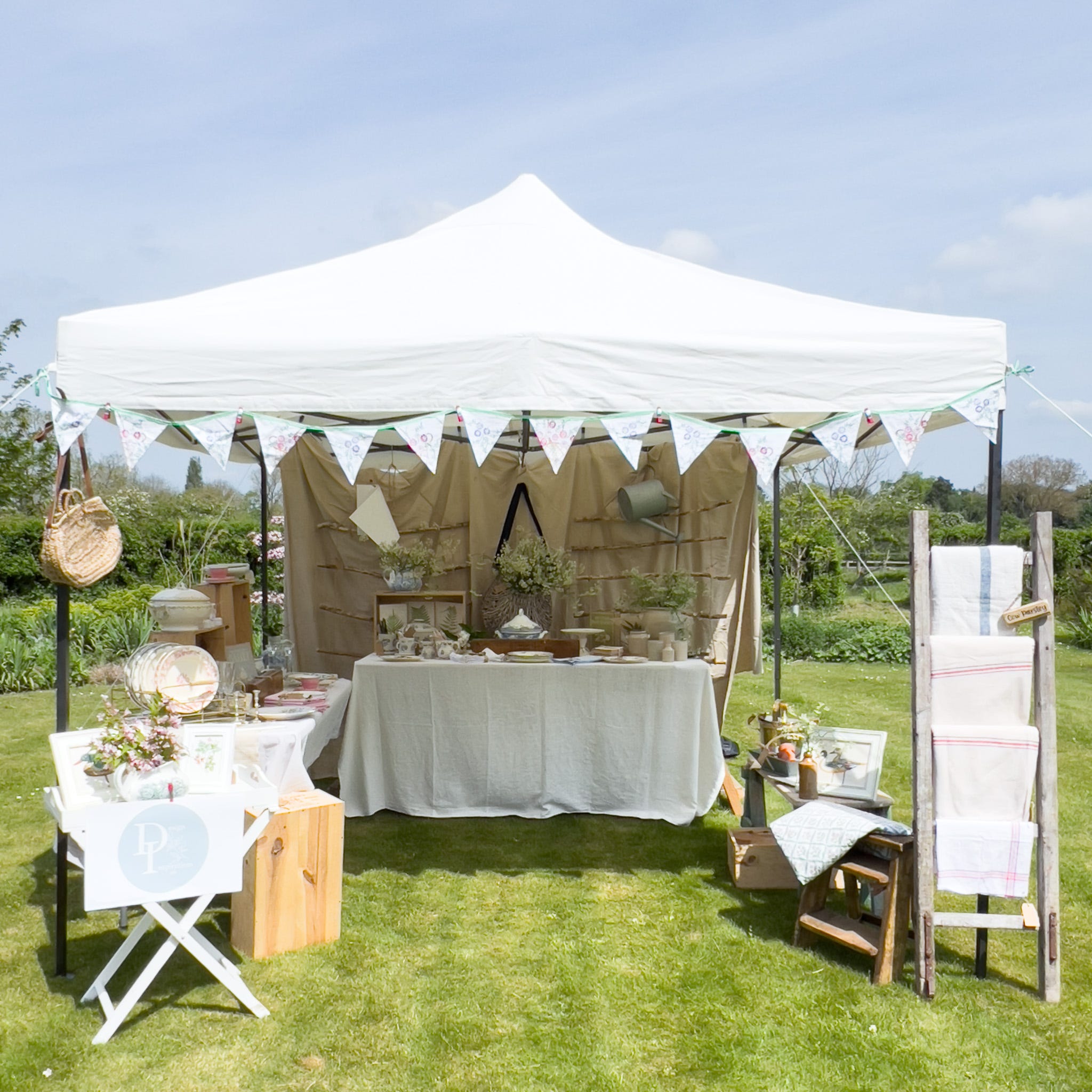
I was at a fair recently and a fellow vintage seller confided in me that she had had a frustrating day. It seemed that every person that visited her stand wanted a discount often claiming to be ‘trade’ and therefore requesting a ‘trade’ price. This conversation sent me down a rabbit hole of asking myself how self-employed business owners arrive at a ‘fair’ price for their goods or services and why it seems so universally hard, particularly for women, to put a value on their time, products or services let alone discuss discounts.
If you are a small-business owner, then read on and let me know in the comments if you can relate. If you are a customer of women-run small businesses then maybe some of this will give you an understanding of the angst behind the pricing.
I sell vintage pieces for the home and garden and sourcing these can be a long, but fun, process. Sometimes I’ll drive miles to a fair or brocante only to come away empty handed. Other times I’ll come across a treasure trove of riches and find lots of things I like in one fell swoop. The very nature of the things I sell means there is no one-stop wholesaler to go to in order to pick up a fresh supply of stock at a fixed price. The wide variety of places and sources where I find my stock brings with it a large variation in price. That’s why one day I might sell a piece for a certain price to cover the costs of, not just the item itself, but the time and money spent in sourcing it. The next time I have a similar item it might be for a different price altogether
If you sell your services as say a photographer or maybe make the pieces you sell yourself the variables might not be so well……. variable. Nonetheless the basic costs of raw materials, heating, lighting equipment, insurance etc all need to be covered first before even thinking about the margin to charge to make a profit.
Even as I write this I wince slightly at the word ‘profit’; it makes me feel guilty and greedy to even think of keeping some of the proceeds for myself, but more on that later.
The gender pay gap
We are probably all familiar with the gender pay gap where men are paid more than women for comparable work in paid employment. My rabbit hole on this topic revealed that men get paid around 17% more than women in this sector.
As I tunnelled deeper into this particular hole I discovered that within the self-employed sector women consistently undercharge by 20-30% compared to men. I came across another study that said men in the UK on average charge 43% more than women in the self-employed sector. Whichever numbers are the most accurate remains unclear and the purpose of this newsletter is not to attack men but to try to understand the psychology of this difference.
A social stereotype
I think there is a perception that women should be uncomplaining, not be too demanding, to be polite, caring and considerate. To fit in and not make life too difficult. If this is true then it makes it difficult to be assertive with our pricing, to stand firm and say ‘no’ if we don’t want (or can’t afford) to give a discount. To worry that we have upset someone or done something wrong if a potential customer doesn’t buy from us or like what we do. Sound familiar?
Discomfort with money conversations
Many of the small business owner women I have met (including myself) started up their own business from a hobby or interest (especially at a time when we had/ have young children as a means of earning some money while fitting a job in around the family.
Because our starting point is often an eagerness to monetise something that was / is a source of enjoyment (eg sewing, candle making, photography etc) it can be difficult to transition from that mindset of something ‘fun’ turning to something ‘financial’. The line between ‘hobby’ and ‘job’ is very vague.
I remember the first ever thing I sold. I literally felt like I was committing a crime by charging more for the item than I’d paid for it! It was a fellow female business owner that counselled me out of the guilt I felt about the ‘profit’ I had made. She pointed out that I had driven around the country-side paying petrol, incurring costs and curating the items I sold which saved the customer from having to do the same! All this took time whereas the purchase by the customer was a simple ‘click’ away on the computer. That pep talk really helped.
As well as the blurred lines between ‘hobby’ and ‘job’ I think we often prioritise the flexibility our self-employment gives us around the family over financial reward and hence don’t feel comfortable discussing our finances because it somehow suggests we have moved our family down the list of priorities maybe? But should these two priorities really be so disconnected I wonder?
Imposter syndrome
It can be hard to see our worth, I know women who, despite having loads of talent, just can’t see it themselves. It is like they almost need an official certificate or qualification as independent proof that they have reached a certain ‘grade’ that justifies their place in the market.
Another rabbit hole led me to studies by companies such as KPMG and Hays showing that 75% of female executives experience imposter syndrome. This is characterised by down-playing their achievements, attributing their success to luck or some external factor, comparing themselves to someone they think is better or more successful than them or simply holding their breath and thinking that sooner or later they will get caught out when others realise they aren’t as good as they thought they were.
Well, it turns out this is also true in the self-employed marketplace. I guess this then is why women are charging less for their services than men and with no HR department to keep a check on such things we are shooting ourselves in the financial foot. Female networking groups or friends have their part to play in keeping us on track if we share our experiences and aren’t afraid to discuss pricing strategies. That pep talk by my friend was much needed and I continue to remind myself of her words whenever I am struggling to ‘justify’ my prices.
That compulsion to be perfect
Women, I have read, often come up with a list of obstacles as to why they aren’t charging as much as they should. Most of them seem to boil down to two things; a lack of confidence and a feeling that everything has to be 100% perfect first. So, somehow we make excuses about why we just need to line up x, y and z before we are in a position to make changes to our price structure or we don’t feel as good as the competition down the road so can’t charge quite so much yet.
The small changes we can make to our pricing strategy
To avoid being all doom and gloom I found some suggestions of how we can help ourselves:
· Keep a folder with positive reviews from customers that you can refer back to whenever you have a crisis of confidence. It will give you a lift and reassure you that you are on the right track.
· Remind yourself that no one knows what your starting costs were so their comments about pricing aren’t based on facts.
· If your business is ‘busy’ then try not to worry about the sales you didn’t make and concentrate on the customers you do have. There are only so many hours in the day and those customers clearly do value your work and are prepared to pay.
· Give yourself regular pep talks to remind yourself of all the hidden costs in arriving at your prices (eg driving to source items, staying over, customs, duty, postage advertising)
· Having a clear pricing structure that customers can see and understand and setting yourself a date each year that you will review your prices and increase them if appropriate.
· While having a clear pricing structure is helpful to business owner and client alike it is important not to just say you charge “£x per hour and the client gets y’ but to make it clear why that investment is worth the price- eg an interior designer might charge £100 an hour but letting the client know that paying for their time will save costly mistakes, provide a cohesive look that will stand the test of time’ etc reinforces the ‘value’ behind the hourly charge. It lets the customer know they are paying for a professional not just for an hour of time- and ‘no’ by professional it does not mean you have to have a list of certificates as long as your arm to prove it. The experience and knowledge you have accumulated in your own niche is what matters.
· Practice saying ‘no’.
· Prepare responses to common questions so you are consistent but remember to focus on the value you give rather than justification for the price.
· Be kind to yourself- not everyone will be your ideal customer and that is ok.
· Don’t forget the price you charge isn’t simply to cover the cost of the raw materials it is to value your knowledge, your time, your investment and your skills and experience.
I’m only human
While I have read the theory and suggested some of the solutions I am after all only human.
Like that lady I met at a fair recently I too find it very difficult to refuse someone who asks for a discount. In my particular field (selling vintage homeware) it is all too common to be asked for a discount. I think of it as the “bargain hunt’ effect. For those of you that haven’t seen the lunch time antiques programme it basically involves two teams that are looking to buy antiques to sell at auction for a profit. The team with the largest profit (or smallest loss in some instances) wins. In order to stand a chance of making a profit they often have to try to drive a hard bargain with the seller they buy from. I think this is almost seen as the ‘done’ thing now in the vintage and antiques world.
I remember a fair I did where I was asked for discounts all the time and caved in because it felt so bad to say ‘no’. I was worried the customer would be annoyed and not buy from me. When I got home and worked out my profit after taking into account the cost of the pitch, the petrol etc I was upset to see I’d barely made a penny.
How I have dealt with it is to plan ahead. I decide which items I might take a discount on and which I won’t and work out in advance what percentage discount is acceptable to me (if any). I have even come up with a time when I might consider a discount (last hour of a fair on big items- simply because I don’t want to load them back in the car). I have also ‘rehearsed’ my answer practising it on friends and family to make sure it doesn’t sound too rude. In truth saying ‘no’ still feels awkward but it has got much easier with time and I have often found that an item I have refused a discount on often subsequently sells for the asking price in any case. No one has been angry with me for saying ‘no’ and at the end of the day everyone has a choice as to whether they want to buy something or not.
What I am most guilty of though is undercharging on the basis that I find my business ‘fun’ and do it for pleasure. I still describe my business as a bit of a ‘hobby’ and I haven’t quite got the balance right in my head yet between ‘fun’ and also needing to ‘pay it’s way’ . I am still working on feeling like an imposter in the vintage world too but no one said this pricing journey would be easy.
After taking a trip down this particular rabbit hole I hope to be more mindful of the person behind the pricing and to remember that if the business is run by a woman then the price might well be 20-40% less than it should be. Now that is a sobering thought!